Before you go
Practical info for international visitors 实用信息
Visas, getting there, money, language, altitude and what to pack — the things that are different when you travel in northwest China.
✈️Getting there
Fly to Xining Caojiabao Airport (XNN), about 30 km from downtown Xining, with direct flights from Beijing, Shanghai, Xi'an and Chengdu — connect via a major hub from abroad, as there are no direct international flights to Xining.
By rail, the Lanzhou–Xinjiang high-speed railway reaches Xining from Lanzhou in about 1.5 hours, and from Xi'an in about 4 hours. The loop starts and ends in Xining.
🛂Visa
Many nationalities can now enter China visa-free for up to 30 days, and citizens of 54 countries can transit visa-free for up to 240 hours (10 days). The eligible-country lists and the rules change often — check with the nearest Chinese embassy or consulate before you book.
Carry your passport at all times: hotels and scenic areas require it for check-in and tickets.
💳Money & payment
China runs on mobile payment (Alipay and WeChat Pay), but both now let foreign visitors link an international bank card (Visa / Mastercard) — set this up before you arrive.
Cash (RMB) is still accepted everywhere, and ATMs in Xining, Dunhuang and Zhangye take foreign cards. Carry cash for small towns, rural guesthouses and roadside stalls.
🗣️Language
English is rarely spoken outside larger hotels. Road signs on highways are in Chinese with pinyin. Download an offline Chinese pack for your translation app before arrival, and save this site's Chinese place names (青海湖, 茶卡盐湖…) to show taxi drivers and ask directions.
Note: Google, Facebook, Instagram and WhatsApp are blocked in mainland China — prepare offline maps and translation in advance.
⛰️Altitude
Xining sits at about 2,300 m; Qinghai Lake is at 3,196 m and the highest passes on the loop reach about 3,800 m. Most travellers feel fine, but take it easy on day one: avoid alcohol and strenuous exercise, drink plenty of water, and rest if you feel dizzy or short of breath.
If you have a heart or lung condition, ask your doctor before travelling.
🌤️Best season
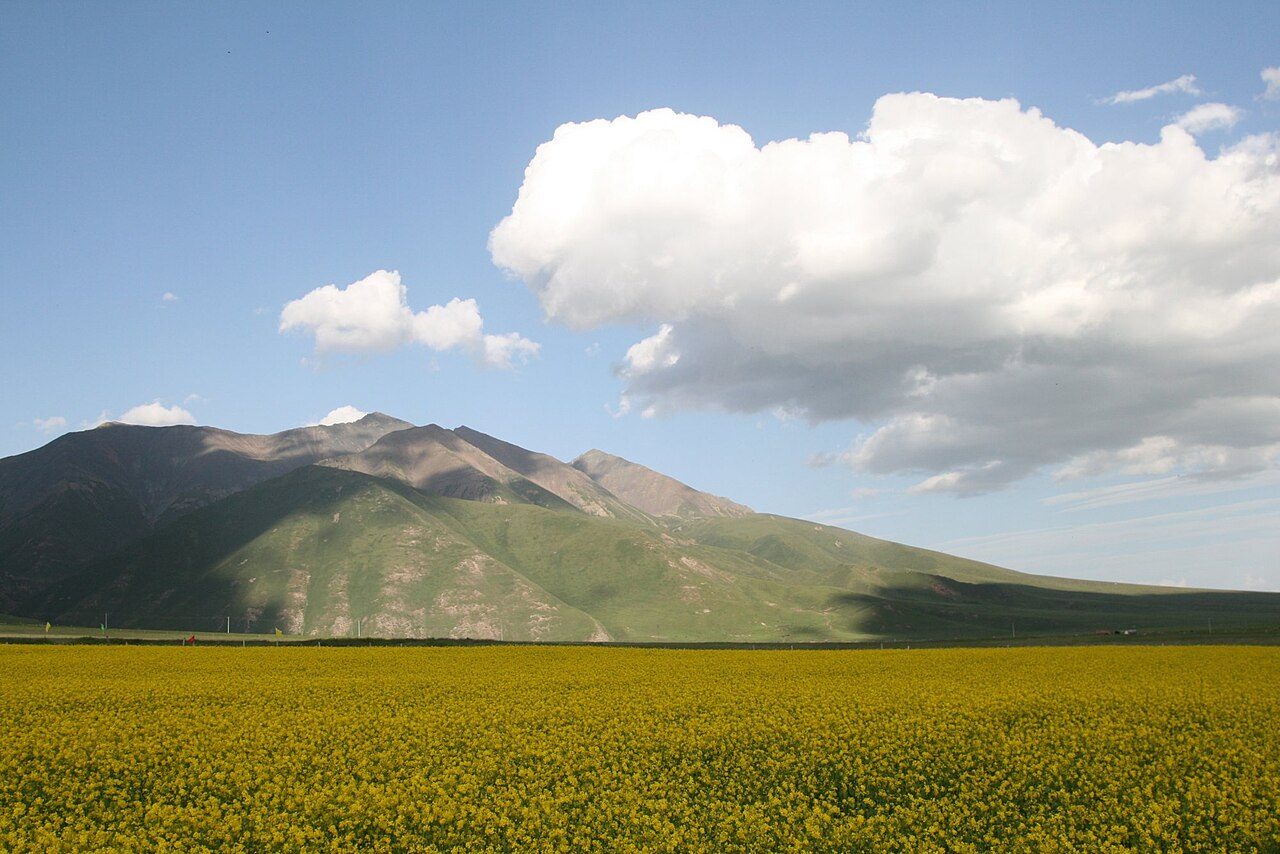
June to October is the window. July and August are the peak: green grasslands, blooming rapeseed and the warmest weather — also the most visitors and occasional rain. September brings golden autumn colours and thinner crowds.
Winter (November–March) is very cold, and some scenic areas run reduced hours.
🎒What to pack
- Sun protection: UV is strong at altitude — sunscreen, sunglasses, hat.
- Layers: days can be warm, but nights drop sharply, especially in the mountains.
- A windproof jacket and comfortable walking shoes.
- Lip balm and moisturiser for the dry air.
- A power bank, a reusable water bottle, and some cash.
🚗Driving
China does not recognise international driving permits: to drive yourself you need a Chinese driving licence (a temporary permit is possible in some cities with a valid home licence and translation — check the rules in advance).
Most international visitors hire a car with a local driver — the easiest way to do the loop. Distances are long and fuel stations are sparse in the desert: fill up in every town.